Fertilizer Guide for Kenyan Farmers: NPK, DAP, CAN and Foliar Feeds
Choosing the right fertilizer at the right time is one of the simplest ways to raise yields on any Kenyan farm, from a quarter-acre vegetable plot to a large maize field. Yet many farmers lose money by using the wrong type, the wrong amount or applying it at the wrong stage. This guide explains the common fertilizers in Kenya in plain language.
 Global Max Shop Team · 7 min read

Why crops need fertilizer
Plants take nutrients from the soil every season. When crops are harvested and carried away, those nutrients leave the farm with them. Over years of continuous cultivation, especially without manure or crop rotation, many Kenyan soils have become low in key nutrients such as nitrogen and phosphorus. Fertilizers replace what has been removed and supply what the soil naturally lacks, so crops can reach their potential.
Fertilizer is not a substitute for good farming practice. It works best alongside quality seed, timely planting, weed control, organic matter and good water management.
The three main nutrients: N, P and K
Every fertilizer bag shows three numbers, such as 23-23-0 or 17-17-17. They are the percentages of the three primary nutrients:
- Nitrogen (N): drives leafy, green growth. Crops short of nitrogen look pale yellow, starting with the older, lower leaves.
- Phosphorus (P): builds strong roots, supports flowering and seed formation, and is especially important at planting. Deficient plants may look stunted with purple tinges on leaves.
- Potassium (K): supports fruit and grain filling, water regulation and disease resistance. Deficient plants show scorched or yellow leaf edges.
So a 50 kg bag of 17-17-17 contains 8.5 kg each of nitrogen, phosphorus and potassium. Plants also need secondary nutrients (calcium, magnesium, sulphur) and micronutrients (zinc, boron, copper, iron, manganese and others) in smaller amounts.
Planting fertilizers
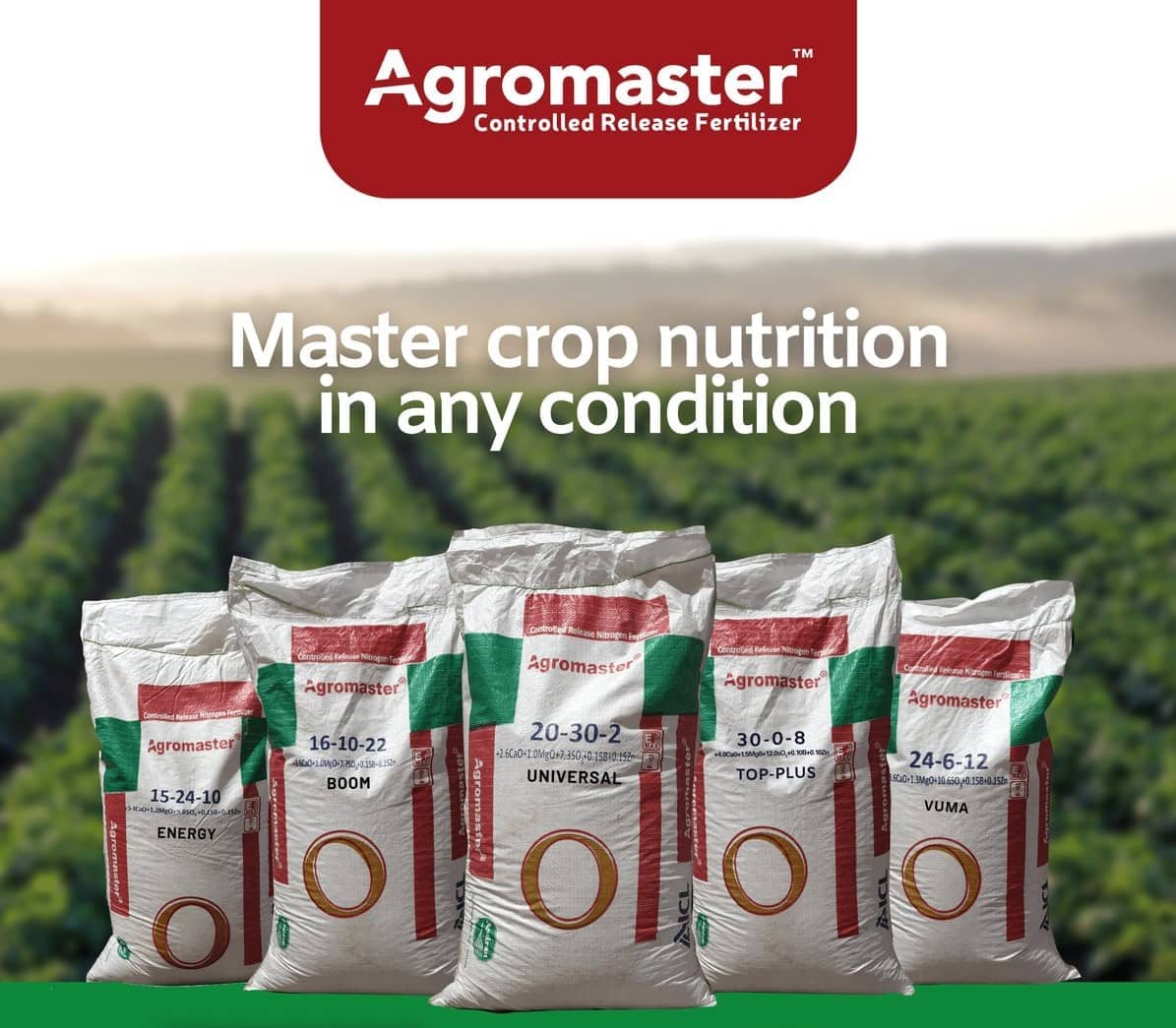
Planting fertilizers are rich in phosphorus because young roots need it most. Common choices in Kenya include DAP (diammonium phosphate, 18-46-0), NPK blends such as 23-23-0 and 17-17-17, and newer blended products that add calcium, sulphur, zinc and boron. Granular, controlled-release options like Agromaster Energy NPK 15-24-10 release nutrients gradually through the early weeks.
Place planting fertilizer in the planting hole or furrow, mix it with a little soil or cover it with soil, then place the seed so it does not touch the fertilizer directly. Direct contact can burn the seed and reduce germination.
Top-dressing fertilizers
Top-dressing fertilizers supply nitrogen during the period of fastest growth. The most common in Kenya are CAN (calcium ammonium nitrate, 26% N) and urea (46% N). Sulphate of ammonia is used on some crops and in alkaline soils.
For maize, top dress when the crop is about knee-high, roughly four to six weeks after emergence, and in larger farms sometimes in two splits. For vegetables, apply three to four weeks after transplanting and repeat as recommended. Apply on moist soil, in a ring around the plant about a hand's width from the stem, and cover lightly or water in. Avoid applying urea on dry, hot surfaces where nitrogen can be lost to the air.
Foliar fertilizers and micronutrients
Foliar fertilizers are sprayed onto the leaves, where nutrients are absorbed quickly. They are useful for correcting micronutrient deficiencies, boosting crops during stress and supporting flowering and fruiting. Products such as BroadHectare Zinc-Copper supply trace elements that many soils lack. Spray in the cool morning or late afternoon, when leaves are dry but not hot, and follow the dilution rate on the label carefully. Foliar feeds complement soil fertilizer; they do not replace it.
Organic fertilizers and manure
Farmyard manure, compost, poultry manure and other organic fertilizers improve soil structure, help the soil hold water and feed beneficial soil organisms. They release nutrients slowly. Many farmers get the best results by combining organic matter with mineral fertilizers, an approach often called integrated soil fertility management. Make sure manure is well decomposed before use, and apply poultry manure carefully because it is strong.
Soil testing: the smartest investment
Without a soil test, fertilizer choice is partly guesswork. A soil test tells you the soil's pH (acidity) and which nutrients are lacking. Many soils in Kenya's high-rainfall areas are acidic, which locks up phosphorus so crops cannot use it even when you apply it. In such soils, liming and choosing suitable fertilizers can make a large difference. Soil testing services are available through research institutions, county agriculture offices and private labs. Testing every two to three seasons is a good habit.
Fertilizer guide for common crops
The table below is a general guide only; rates depend on your soil, variety and expected yield, so follow label directions and local advice.
- Maize: a phosphorus-rich planting fertilizer, then CAN or urea top dressing at knee height.
- Beans: a planting fertilizer with phosphorus; beans fix some of their own nitrogen, so heavy nitrogen is unnecessary.
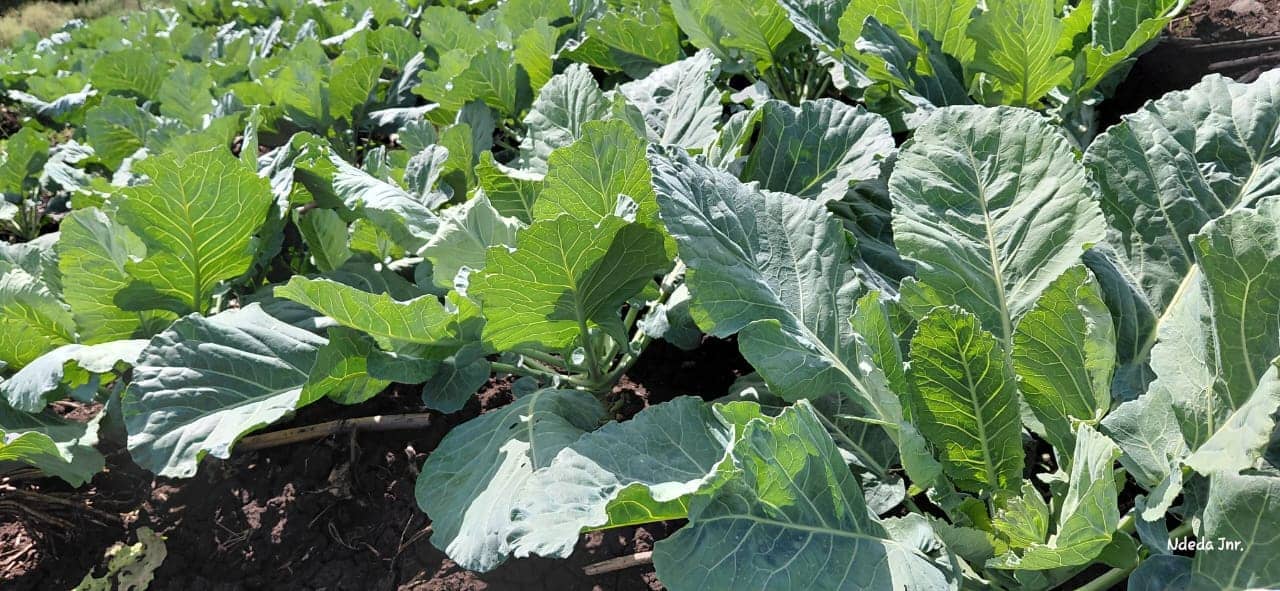
- Sukuma wiki, kale and cabbages: manure plus a planting fertilizer, then regular nitrogen top dressing for leaf growth.
- Tomatoes and capsicum: planting fertilizer, then balanced and potassium-rich feeds at flowering and fruiting; calcium helps prevent blossom end rot.
- Potatoes: a balanced NPK at planting, as potatoes need plenty of phosphorus and potassium.
- Bananas and fruit trees: manure plus balanced and potassium-rich fertilizers applied in a ring under the canopy.
Timing fertilizer with the rains
In rain-fed farming, timing is everything. Planting fertilizer goes in with the first planting rains. Top dressing should follow when the soil is moist and more rain is expected, so the nutrients dissolve and reach the roots. Applying nitrogen just before heavy storms can wash it away, while applying it in a dry spell leaves it sitting unused on the surface. Follow weather forecasts from the Kenya Meteorological Department and your county agriculture office, and keep your inputs ready before the season starts so you never miss the window.
How to calculate how much you need
Recommendations are often given per acre or per hectare (one hectare is about 2.5 acres). If a recommendation is one 50 kg bag per acre and your plot is a quarter-acre, you need about 12.5 kg. For maize planted at standard spacing, many farmers use roughly a level bottle-top or small measure per planting hole, depending on the product. Weigh your measuring cup once with the fertilizer you are using, so you know how many grams it holds, then calculate how many holes the bag will cover. Precision saves money and protects your soil.
Common fertilizer mistakes
- Using the same fertilizer for planting and top dressing. Each stage needs different nutrients.
- Applying too much. Excess fertilizer burns roots, wastes money and can pollute water sources.
- Placing fertilizer in direct contact with seed.
- Top dressing too late, after the crop's period of fastest growth.
- Applying on very dry soil without rain or irrigation to move nutrients to the roots.
- Ignoring soil acidity, which reduces the benefit of phosphorus fertilizers.
- Buying unlabelled or repackaged products of unknown quality.
Telling genuine fertilizer from fake
Counterfeit and adulterated fertilizer is a real risk in some markets, and it can ruin a season. Protect yourself by buying from trusted suppliers, checking that bags are properly sealed and labelled with the manufacturer's name, nutrient content, batch number and weight, and being wary of prices far below the market rate. Genuine granules are usually uniform in size and colour. If you suspect a fake product, report it to the agricultural authorities and keep a sample and your receipt.
Storing and handling fertilizer safely
Store fertilizer in a dry, well-ventilated store, on pallets off the floor and away from walls. Keep bags closed to stop moisture forming lumps. Store fertilizer away from food, animal feed, seeds and children. Wear gloves when handling, wash your hands afterwards and never eat or smoke while applying. Some fertilizers, such as ammonium nitrate-based products, must be kept away from fuel and fire.
Buy fertilizers online in Kenya
Global Max Shop helps you buy fertilizers online in Kenya and get them delivered to your farm or nearest town. Browse all fertilizers, certified seeds and farming equipment in our farm inputs department. Order early before the planting rush, tap Order on WhatsApp and we confirm price and delivery. For a smaller-scale start, read our kitchen garden guide. Always follow product labels, and ask your local extension officer for advice specific to your soil and crop.
Frequently asked questions
When should I apply DAP?
At planting, placed in the hole or furrow and covered with a little soil before the seed is placed, so the seed does not touch the fertilizer.
What is the difference between CAN and DAP?
DAP supplies phosphorus and some nitrogen for planting; CAN supplies nitrogen and calcium for top dressing.
Is urea better than CAN?
Urea contains more nitrogen per bag but can lose nitrogen to the air if left on dry, hot soil. CAN is often preferred on acidic soils. Follow local advice.
How do I know if my soil is acidic?
A soil test is the reliable way. Poor crop response to fertilizer can be a sign of acidity.
Can I mix manure with fertilizer?
Yes. Combining well-decomposed manure with mineral fertilizer often gives the best results.
Can I buy fertilizers online in Kenya?
Yes. Order on WhatsApp at Global Max Shop for delivery to your farm or nearest town.
Need help choosing?
Send us a message and our team will recommend products and confirm today's prices.
We are a Nairobi-based online store helping Kenyans shop beauty, health, food, school and farm products with confidence. Our guides are general information, not medical or professional advice.